Fix how your business runs, then own the software built for it.
When a small or mid-size business outgrows the tool that almost fits and the spreadsheets around it, you get custom software, CRM integrations and AI automation built for how it runs. You own everything that gets built.
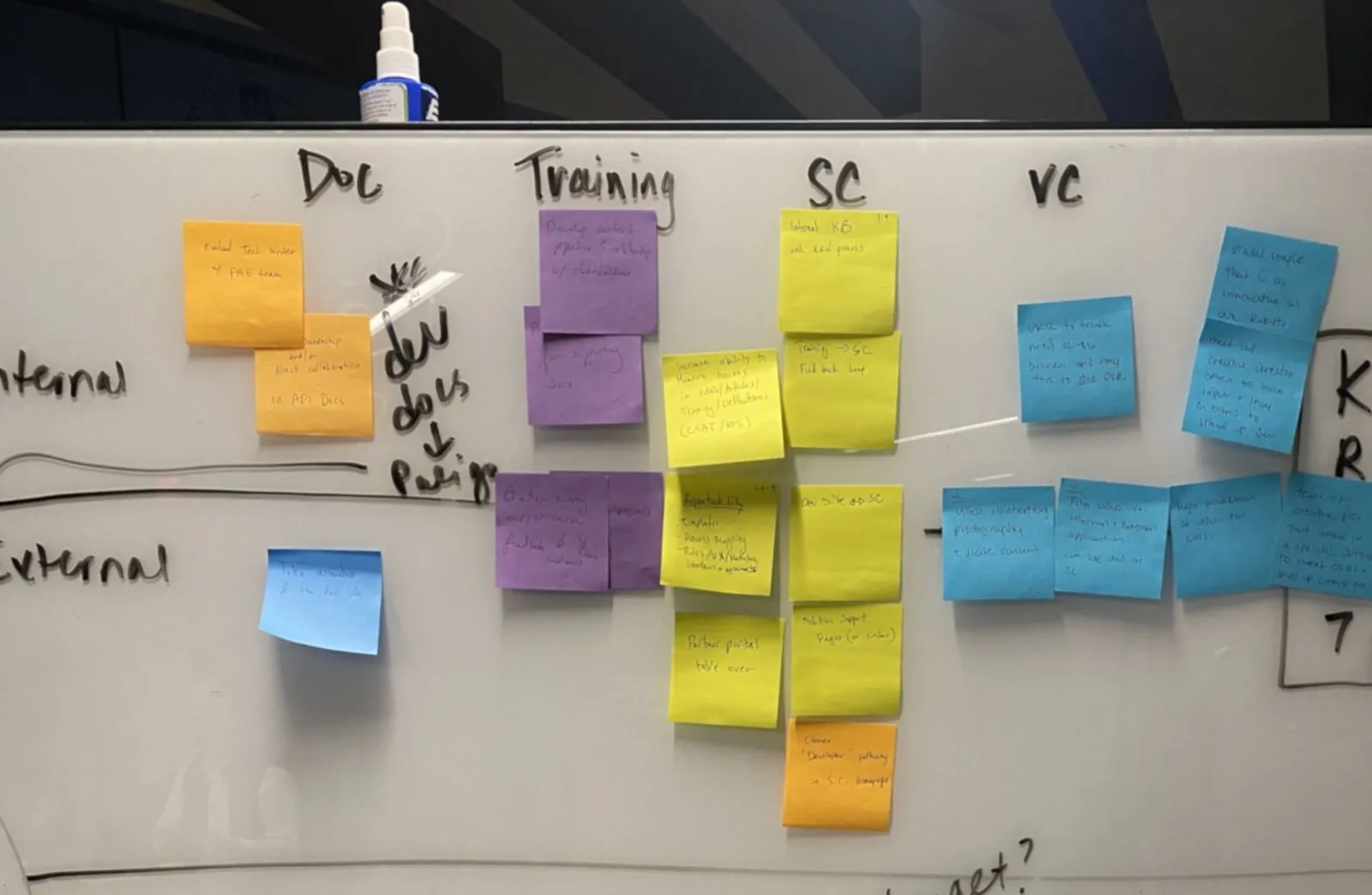
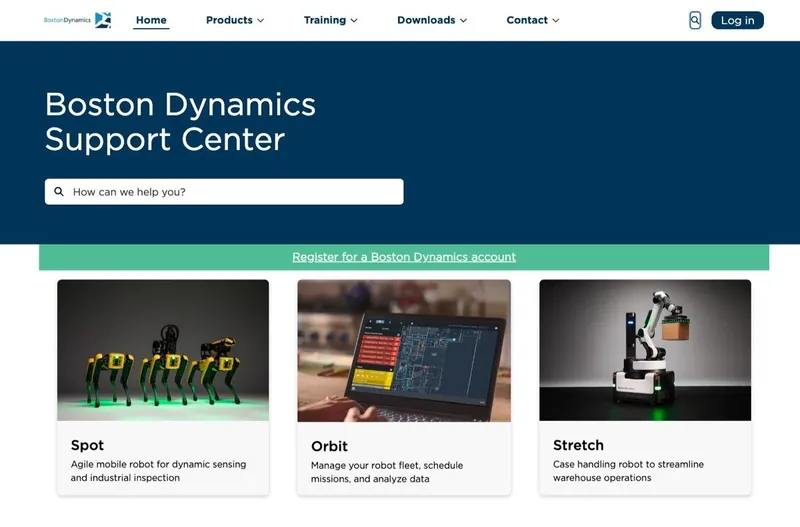 After · Boston Dynamics
One support center for Spot, Orbit and Stretch
Read the case study
After · Boston Dynamics
One support center for Spot, Orbit and Stretch
Read the case study
Start from what went wrong this week.
Pick the one that sounds like your office. Each one opens the fix for it.
A Sea Trial takes about four weeks and ends with a working prototype and a go, no-go or fix, judged against lines agreed before it's built.
Start with a Sea TrialYour team keeps the judgment calls. The assessment shows where AI would save them the most hours, inside the tools they already use.
Bring the crew aboardTwo systems in use today, and a sailing game.
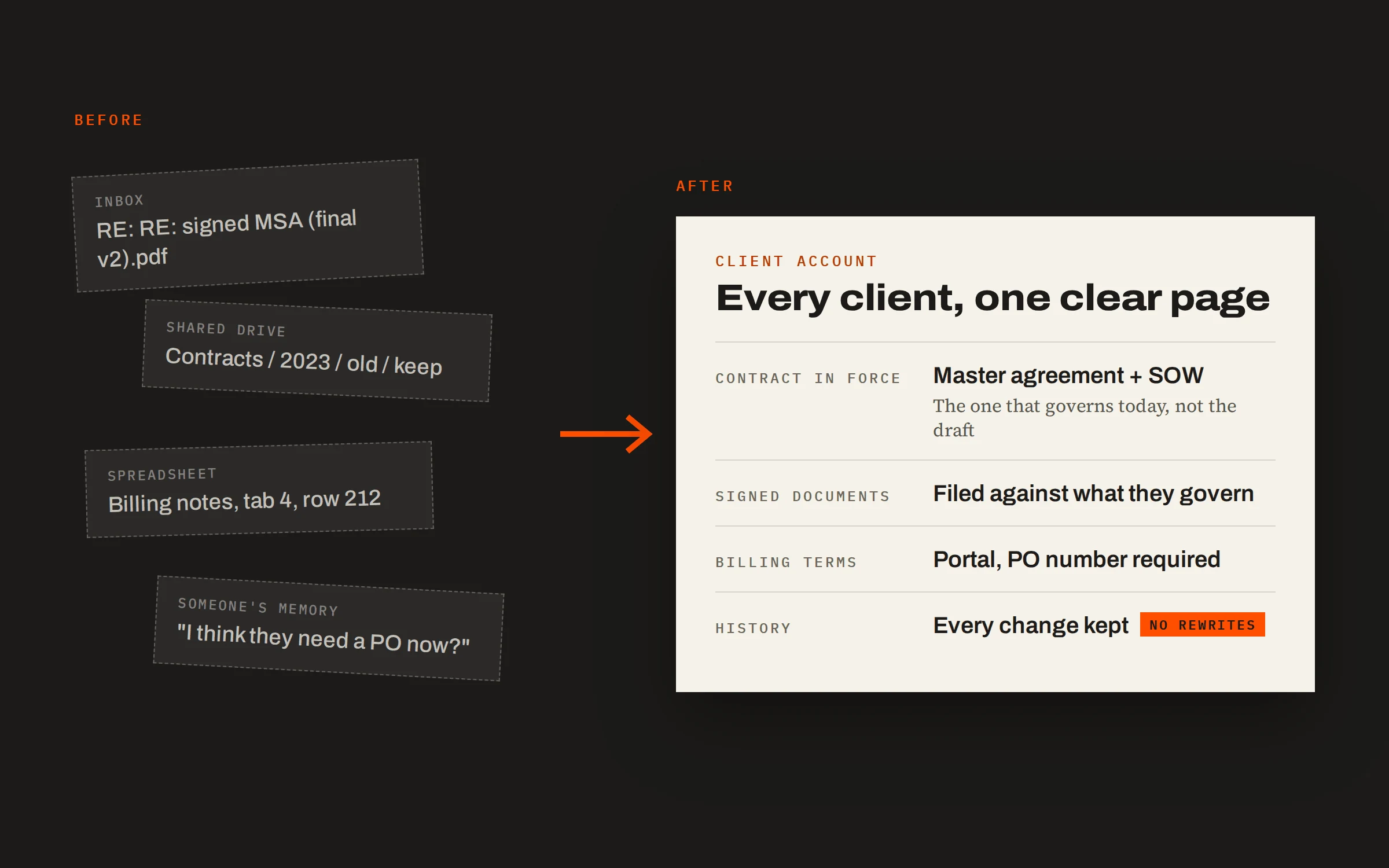
Every client account, on one clear page
A cybersecurity firm's contracts were scattered across inboxes, shared drives and spreadsheets. Now each account shows the contract in force, the signed documents behind it, how the client is billed, and a history of every change that can't be quietly rewritten.
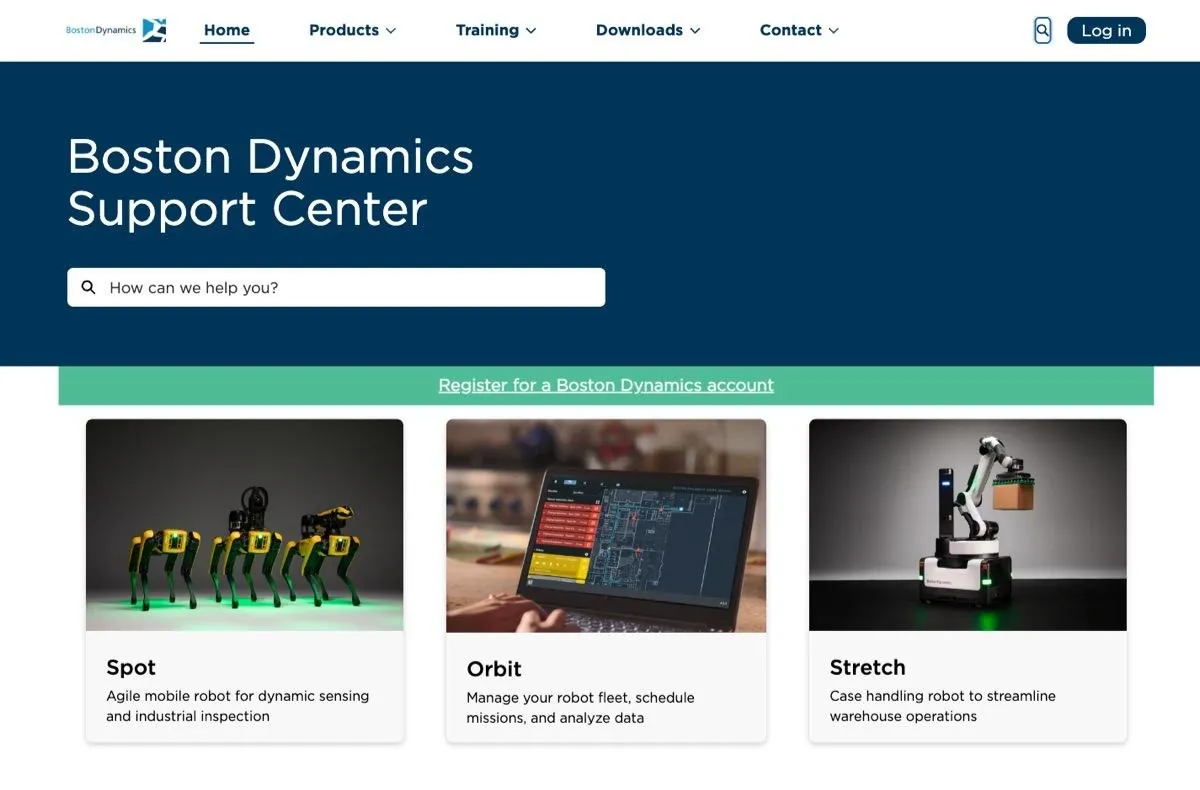
One support center for Spot, Orbit and Stretch
The rebuild of support.bostondynamics.com. Manuals, releases, repair guides and training sit in one place, and customers and partners each see only what they're cleared to see.
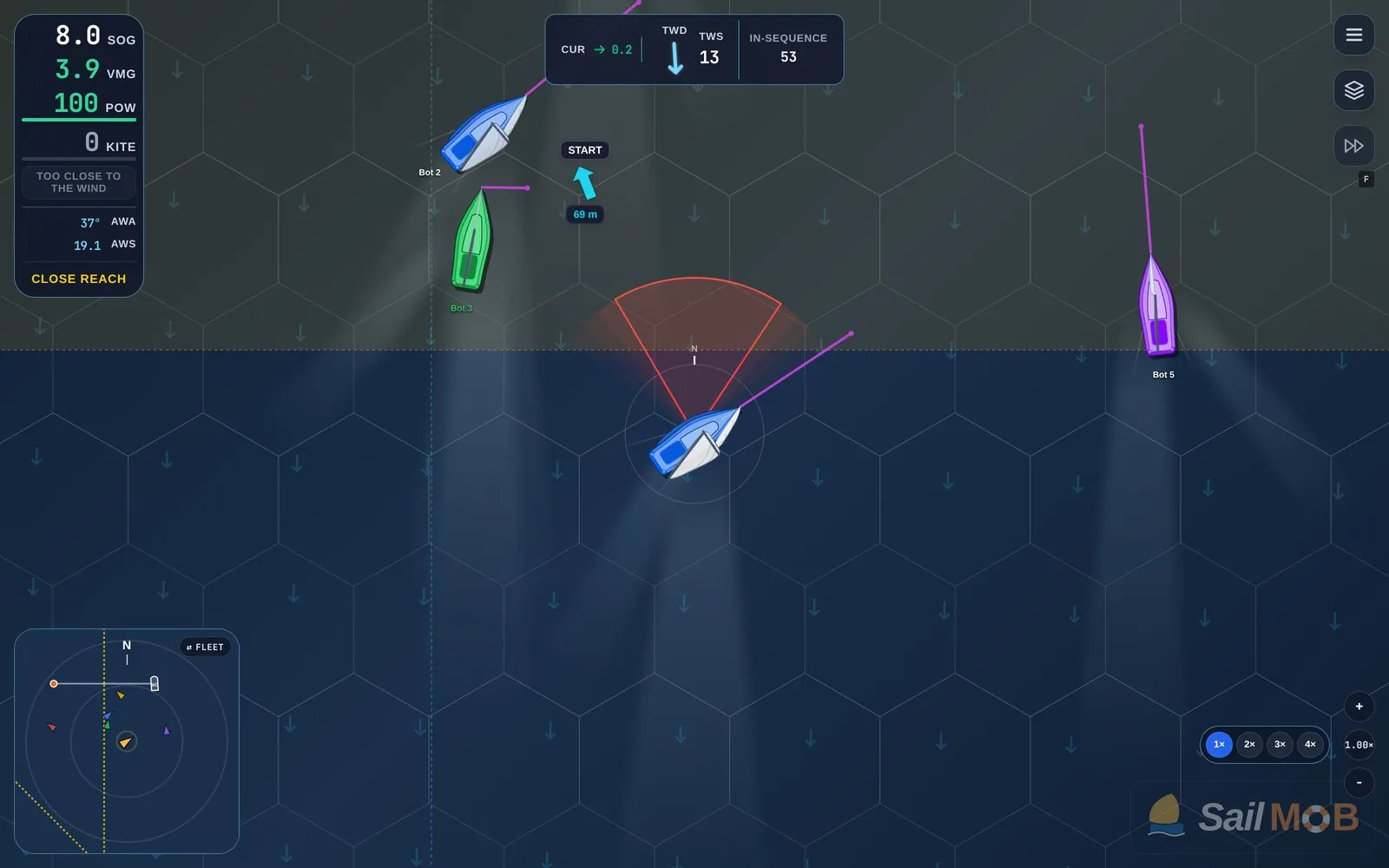
SailMOB
A browser sailing game with real wind physics, raced head to head against an AI fleet. Wind, current and every boat are computed live and shown as instruments you can read at a glance.
What changed, in numbers.

The cybersecurity firm's CEO priced a CRM license plus an implementation partner, then chose to own the system instead. Buy off-the-shelf software for the generic parts. For the part that makes your business different, you keep the code and the data.
Where the work was done.
That work belongs to these companies and their customers.








Fix the mess first. Then build. Then automate.
Every engagement runs in this order. If buying software beats building it, that's the recommendation you'll get.
- 01 · Audit
Fix the mess first
How the work moves today, what's slow or broken, and a written plan to fix it, before anything gets built.
- 02 · Build
Then build
The application your team works in, the data and connections behind it, and the knowledge base around it, built to that plan.
- 03 · Automate
Then automate
AI and automations for jobs like sorting the support inbox or copying orders into the CRM, with training so your team runs them.
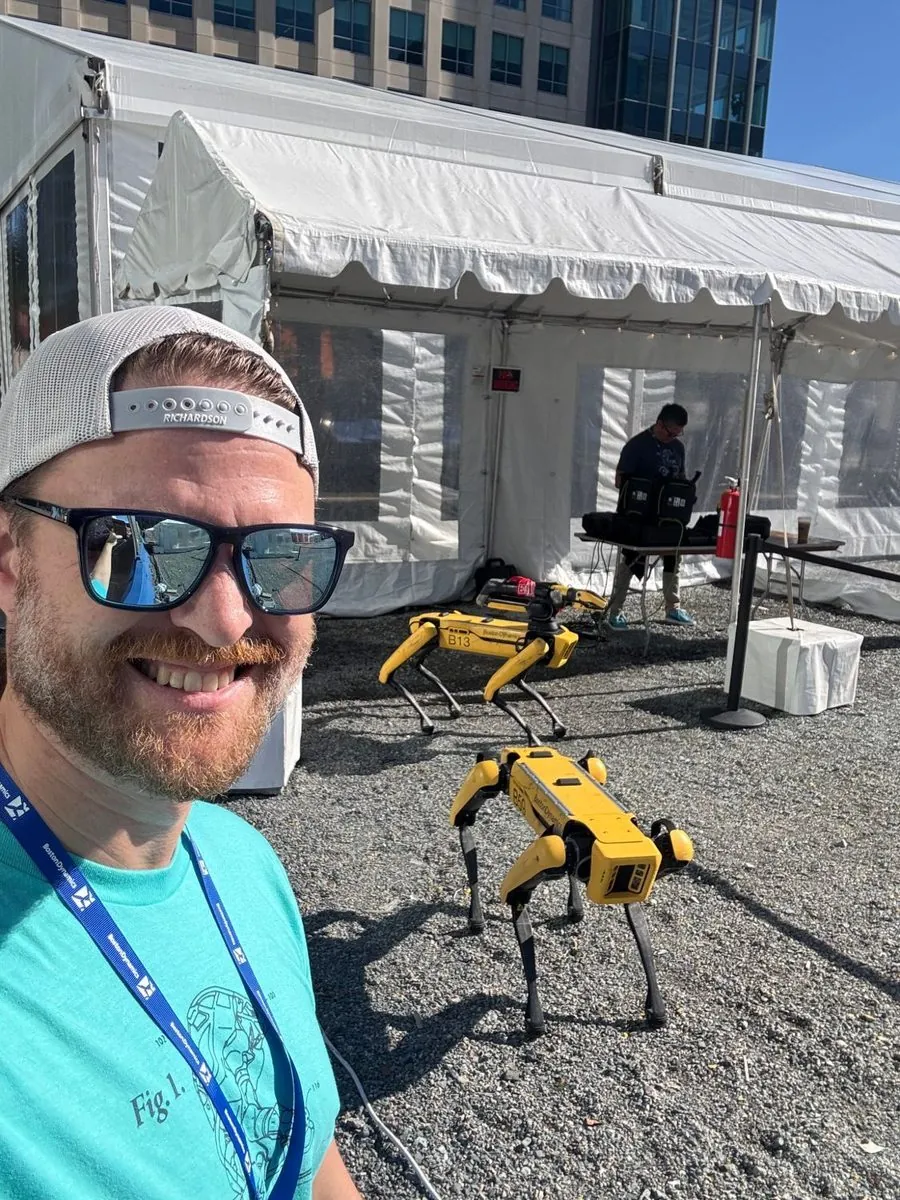
Michael O'Brien, operations and product.
The person who maps how your business runs also writes the code, after a decade in operations at Uber, iAdvize and Boston Dynamics. At Uber, investigations started as part of one role and grew into a 130-person program across two sites. At iAdvize, the work was a sentiment analysis program for Samsung's live chat during the Galaxy S20 launch, which flagged at-risk customers and routed them to senior agents. At Boston Dynamics, it was the rebuild of support.bostondynamics.com.
The person on your first call is the one who builds it and hands it over.
Which part of the business would you fix first?
Bring it to a first conversation. You'll hear whether to build it with your own team, start with a prototype, or buy something off the shelf.